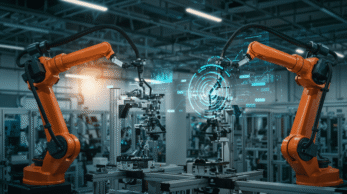
Equipment failure costs manufacturers far more than most teams realise. According to a Siemens report, unplanned downtime costs industrial manufacturers an estimated $50 billion per year.
Mean Time Between Failures (MTBF) is the maintenance metric that tells you how often an asset fails and how to reduce it. If your goal is improving MTBF and cutting unplanned downtime, this guide covers everything your team needs to know.
TL:DR
- MTBF measures the average time between failure — specifically, how long an asset operates before the next breakdown.
- The time between failure (MTBF) is expressed in hours. A higher value means longer runs and fewer interruptions.
- MTBF formula: Total uptime divided by the number of failures.
- Paired with MTTR (Mean Time to Repair), MTBF shows you overall equipment availability.
- A CMMS automates MTBF tracking so your team always has accurate data.
What Is MTBF and Why Does It Matter?
MTBF stands for Mean Time Between Failures. It measures the average operating time of an asset before a breakdown occurs. Maintenance teams use it to assess equipment reliability and spot problems before they escalate into system failures.
A high MTBF means your equipment spends more time in continuous operation and less time causing system breakdowns. That improves overall operational efficiency and lowers maintenance costs. Reliable equipment with a consistently high MTBF also reduces pressure on your maintenance team.
The number of failures MTBF tracks will vary by asset and industry. For any particular system, even a small improvement in MTBF means fewer interruptions and more predictable output. A low MTBF signals frequent failures and points to deeper maintenance needs.
MTBF only applies to repairable systems. If an asset cannot be repaired after failure, the correct metric is Mean Time to Failure (MTTF), not MTBF.
How to Calculate MTBF (Formula and Example Computations)
 The most common question after “what is MTBF” is “what is the MTBF formula.” The answer is straightforward. To calculate MTBF, divide total uptime by the number of recorded failures over a given period:
MTBF = Total uptime / Number of failures
MTBF is expressed in operational hours. The result is the average number of hours an asset operates before the next failure occurs.
A) Single-Failure Example
A machine runs 12 hours a day and fails after 5 days:
MTBF = (12 x 5) / 1 = 60 hours
This means the machine is expected to run for about 60 hours before the next failure.
A single failure is not enough to calculate a meaningful average. Track multiple failures for a more accurate MTBF.
B) Multiple-Failure Example (Adjusted for Downtime)
An asset ran 200 hours last month and experienced 4 failures. The basic MTBF calculation:
MTBF = 200 / 4 = 50 hours
To get a more accurate figure, subtract repair downtime. If each repair took 2 hours:
MTBF = (200 – (4 x 2)) / 4 = 48 hours
This adjusted MTBF calculation only counts the hours the machine was actually running. It gives a clearer picture of true asset availability and is the more reliable average value to use when comparing assets.
What Is the Difference Between MTBF and MTTR?
MTBF tells you how often failures occur. Mean Time to Repair (MTTR) tells you how long it takes to restore a system to normal operation. Both metrics work together to give a full picture of asset health.
MTTR = Total downtime / Number of repairs
If an asset was down for 20 hours across 2 incidents:
MTTR = 20 / 2 = 10 hours per repair
A high MTTR means repair processes are slow. This makes the impact of each failure worse. Reducing MTTR is just as important as improving MTBF, especially when unplanned maintenance stops a production line.
How to Calculate Total Equipment Availability
MTBF and MTTR together give you your asset’s availability rate. This is the percentage of time the machine is up and running:
Total availability = MTBF / (MTBF + MTTR)
Increasing MTBF and reducing MTTR both push availability higher. Higher availability means better production efficiency and a more direct effect on output and customer satisfaction.
Need help calculating your equipment availability? Speak with a DimoMaint specialist to find out how a CMMS makes this automatic.
What Is a Good MTBF Value?
There is no single benchmark that works for every industry. A good MTBF depends on your asset type, how critical it is, and your current baseline. What matters most is whether the number is trending upward over a specific period.
Reliability engineers use MTBF as a core part of their maintenance management strategy. They typically apply it to:
- Compare performance across similar assets
- Set thresholds that trigger preventive maintenance schedules
- Flag assets with low MTBF and frequent failures for root cause analysis
- Lower costs by making the case for asset replacement before a critical failure occurs
A low MTBF on a critical asset points to a real problem. It could mean poor maintenance schedules, wrong parts, or an asset approaching end of life. Analysing this data helps maintenance teams build a smarter maintenance strategy going forward.
Why Tracking MTBF Matters for Your Business
Tracking MTBF consistently helps maintenance teams move from only unplanned maintenance to scheduled, planned work. This has a direct impact on costs and efficiency. McKinsey research shows that predictive maintenance strategies can reduce machine downtime by up to 50% and lower maintenance costs by up to 25%.
The key benefits of tracking MTBF across your production system include:
- Reducing unexpected breakdowns and unplanned downtime
- Reduce maintenance costs by catching problems before they become expensive
- Extending asset lifespan through better preventive maintenance
- Planning maintenance tasks around production windows, not crises
- Improving quality control by keeping equipment running in normal operation
- Comparing asset performance to spot underperformers
Analysing data from your MTBF records over time also helps maintenance teams identify patterns across the facility. This turns raw numbers into a clear action plan.
Some Case Studies of MTBF Tracking in Different Industries
For this guide, we want to share two specific industries and how the MTBF will affect an organizations:
1) In Manufacturing
In manufacturing processes, a short unplanned stoppage can delay an entire production run. That is why manufacturing MTBF tracking tends to be more detailed. Production managers need to know how reliable each line is before committing to delivery schedules.
When you track MTBF at the machine level, your manufacturing team can:
- Set realistic production capacity estimates based on actual operational hours
- Build buffer time for assets with a history of frequent failures
- Use failure rate data to justify equipment upgrades
- Shift from unplanned maintenance to scheduled preventive maintenance
Good scheduled maintenance, informed by MTBF data, is where the biggest gains come from. It requires consistent maintenance data and a clear system to act on it.
2) In Healthcare
Equipment failure is not only a manufacturing problem. In healthcare, asset failure directly affects patient safety. A diagnostic device or life support system with a low MTBF is a clinical risk, not just an operational inconvenience.
Maintenance teams in hospitals use MTBF to prioritise preventive maintenance on critical equipment, meet compliance requirements, and reduce the risk of system failures during patient care. The same approach applies across energy, transport, retail, and facilities management.
Any industry where system reliability affects service quality or safety needs to track and monitor MTBF as part of its core maintenance practices.
How a CMMS Software Helps You Monitor and Improve MTBF
The most reliable way to track MTBF is with a CMMS (Computerised Maintenance Management System). Spreadsheet tracking breaks down fast when you are managing multiple assets across different sites.
A CMMS like DimoMaint centralises your maintenance data and automates KPI monitoring. This gives your team a single place to measure MTBF, track MTTR, and manage all maintenance needs. In practice, this means:
- Automatic failure logging: Every work order creates a data point for recorded failures. No manual entry needed.
- Live KPI dashboards: MTBF and MTTR values are always current and visible to the whole team.
- System alerts: Get notified when an asset’s MTBF drops below a set threshold before a critical failure happens.
- Preventive maintenance scheduling: Build maintenance schedules directly from your MTBF data.
- Root cause analysis: Analysing data across multiple failures on the same asset helps identify the cause, not just the symptom.
With the right CMMS in place, your team stops guessing and starts making data-driven decisions. That is how you improve MTBF over time and reduce the cost of system breakdowns.
Ready to track MTBF without the spreadsheets? Request a free DimoMaint demo to see how the platform works for teams like yours.
Frequently Asked Questions (FAQs)
What is MTBF and why is it used in industrial maintenance?
MTBF (Mean Time Between Failures) measures the average time an asset operates before a failure. It helps maintenance teams evaluate asset reliability and reduce unplanned downtime.
How do you calculate the MTBF of an asset?
Divide total uptime by the number of recorded failures: MTBF = Total uptime / Number of failures. For a more accurate figure, subtract repair downtime from total uptime before dividing.
What is the difference between MTBF and MTTR?
MTBF measures how often failures occur. MTTR (Mean Time to Repair) measures how long repairs take. Together, they let you calculate total equipment availability.
What is the difference between MTBF and MTTF?
MTBF applies to repairable systems and measures time between failures. MTTF (Mean Time to Failure) applies to non-repairable systems and measures time until a permanent failure.
Why is monitoring MTBF important in a production facility?
Tracking MTBF helps reduce unexpected breakdowns, supports preventive maintenance planning, lowers maintenance costs, and improves overall operational efficiency.
How can CMMS software help improve MTBF?
A CMMS centralises maintenance data, automates MTBF and MTTR tracking, and supports preventive maintenance scheduling. This reduces failure frequency and improves equipment performance over time.
Want to start improving your MTBF? Contact DimoMaint to speak with a maintenance specialist.